
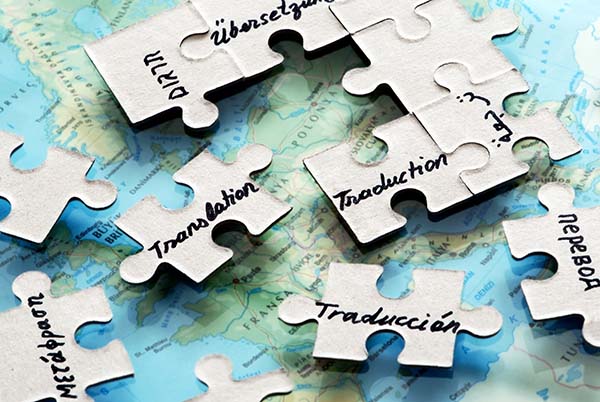
Today, even the smallest firm can serve customers worldwide, and the need for communication across languages and cultures is growing fast. Yet communicating across contexts is difficult and costly. Without special care, a lot can be lost in translation through translation errors and/or different interpretations of the communication, even when it is translated correctly.
The costs of translation errors are often more than financial. Poor communication can lead to loss of reputation, legal exposure, physical harm or even industrial disasters. For this reason, clear, precise and effective communication across cultures, languages, disciplines and industries is a growing priority.
In response, many firms spend significant resources on ensuring communication across their networks of agents, partners, customers and government agencies. This need to share information accurately between different business partners has evolved into what we now call localization.
Localization means technologies and processes that adapt products and services for use in and by particular countries, regions or groups. It is often an extremely complex and costly process, including translation of text and audio, editing of documents and software to reflect localized conventions (such as how decimal points and dates are represented), and the ongoing analysis and integration into products and services of the regulations, compliance and tax requirements of specific countries, states and cities.
This article focuses on one specific function within the broader localization picture: translation. In firms around the world there is growing demand for translation, driven by:
- growing demand for languages other than English,
- a growing number of products and services from non-English-speaking countries reaching foreign markets,
- falling translation costs, driven by improvements in artificial intelligence and a rise in cloud-based translation platforms; these lower costs support a growing “long tail” of companies that can profitably offer services in more languages.
This article discusses this new future, in which demand and possibilities for translation keep growing. We also look at what a company should keep in mind to succeed in this evolving market.
Translation services at a turning point
Companies’ spending on translation services keeps growing, mainly because of globalization and the rising volume of text generated worldwide.
This growth is also driven by new technology. Many organizations use artificial intelligence (AI) in the form of machine translation (MT) to cut translation costs. AI-enabled machine translation platforms such as Google Translate, Microsoft Translator and, the latest to launch, Amazon Translate, have made a big leap in accuracy. This is for two reasons: first, they build on recent breakthrough improvements in neural machine translation (NMT) algorithms, and second, they have access to a much larger amount of language data from search engines, social networks and e-commerce sites.
For less demanding cases, such as translating a website for an ordinary browser, the accuracy of these fully automated AI-based systems has lately become “good enough” for a large number of uses. These translations are usually offered free and supported by advertising, so users are satisfied with the quality they can get and the consequences of errors are small.
By contrast, the accuracy of these existing systems is not adequate for many business use cases, such as creating a user interface in a new language, translating a tax document or producing a user manual for a product in a new language. Even so, AI has a major impact here, where a person uses cases that let the AI system produce an initial translation, which is then refined by a human expert. Although this does not bring translation prices down to zero, the technology still has a profound impact on the translation market, which is changing shape as a result of these forces.
For a view on whether machines will replace agencies altogether, read Could artificial intelligence mean the end of translation agencies?