
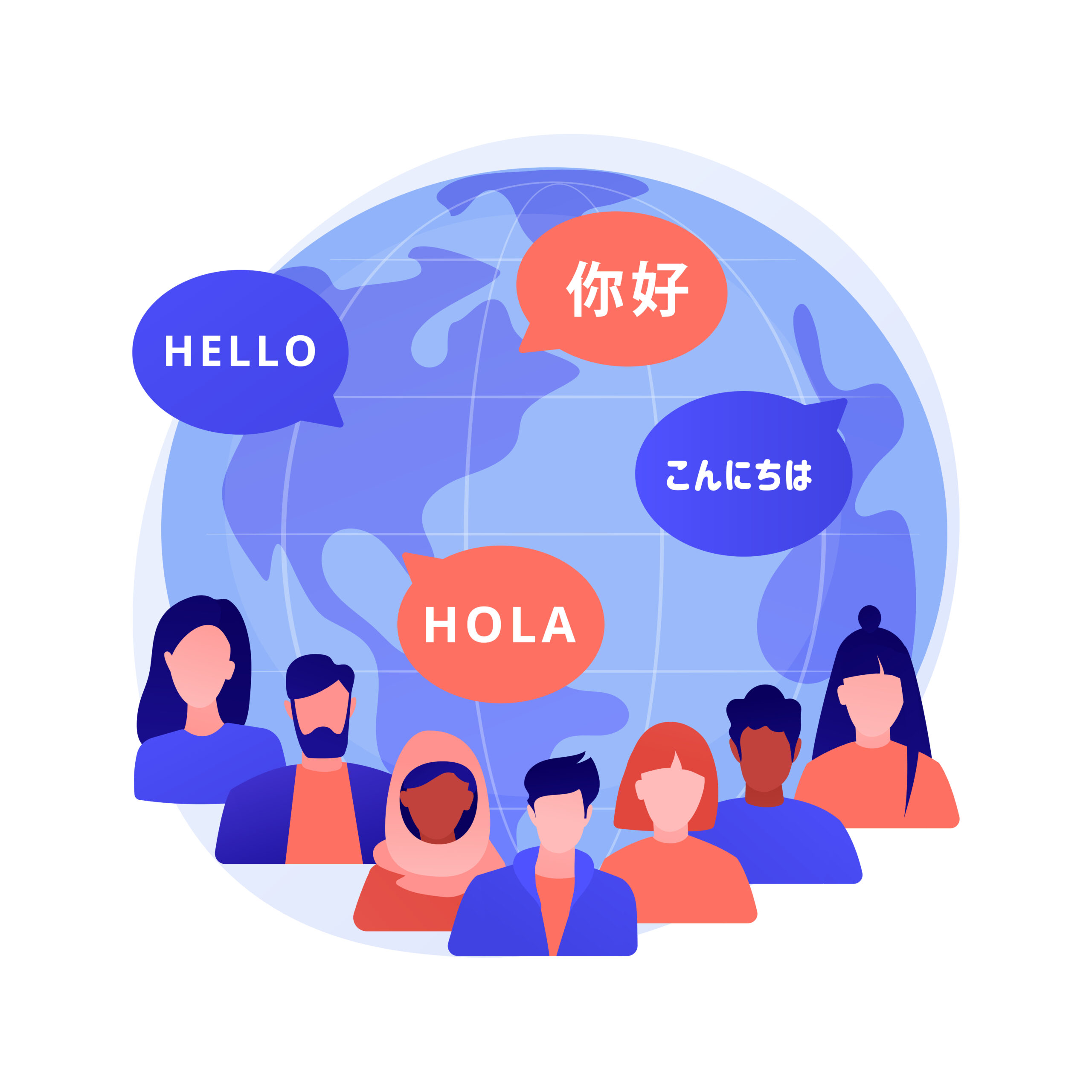
How little, or how much, do we really know about the world around us, about the mother tongue each of us learned in early childhood, and about the other languages of the globe?
For example, linguistic museology was born with the intention of preserving and spreading both knowledge about languages and intangible cultural heritage. It thus underlines the importance of language as a cultural factor in every country. By stepping into such museums, we can reflect on the diversity of languages and, in this way, understand language better as a universal phenomenon.
Babel or diversity?
-
The Syncro Translation Services translation team can tell you that the most frequently translated document in the world is the Universal Declaration of Human Rights. It was written within the UN in 1948 and has been translated into more than 500 languages and dialects.
-
Translating a text from Sanskrit into any other language requires years of in-depth study of its grammar.
-
The Silbo language is specific to the Guanche population of La Gomera, in the Atlantic archipelago of the Canary Islands. In Spanish it is called El Silbo (“the whistle”), because the language is not spoken but whistled according to a particular system, so that it can be heard over long distances.
-
It is currently accepted that the only ancient European languages still spoken are Basque and some languages of the north-western and north-eastern Caucasus, such as Chechen, Circassian, Ingush and Abkhaz, together with the Kartvelian languages and dialects of Georgia.
-
More people are learning English in China than the number of people who speak it officially in the United States (over 300 million).
-
Papua New Guinea is the most linguistically diverse country on the globe: no fewer than 850 languages are spoken there.
-
At the opposite pole, Somalia is often cited as an African country where almost all citizens speak the same language, called Somali.
-
The Miao are a minority group from southern China, northern Vietnam, Laos and northern Thailand who speak a variety of languages known generically as the Miao-Yao or Hmong-Mien languages. With more than 9 million speakers, the Hmong (Miao, Meo) languages are completely different from Cantonese or Mandarin.
-
English is often cited as the language with the richest vocabulary, at around 250,000 words. At the other end stands the Sranan Tongo creole, spoken in the South American state of Suriname, with a much smaller vocabulary.
-
Of all languages, Basque is considered one of the hardest to learn. Its grammar is complicated and it is unrelated to any other known language.
-
Afrikaans, spoken in South Africa, is among the youngest languages in the world.
-
Chamicuro is among the rarest languages, spoken by only a handful of people worldwide. It is the language of the Chamicuro people, Amerindians from the Pampa Hermosa area, on a tributary of the Huallaga River in Peru.